
What EN Chemical Composition Tables Show
Before buying, machining, welding, heat treating or substituting EN material, identify its standard and edition, product form, condition and certificate needs.
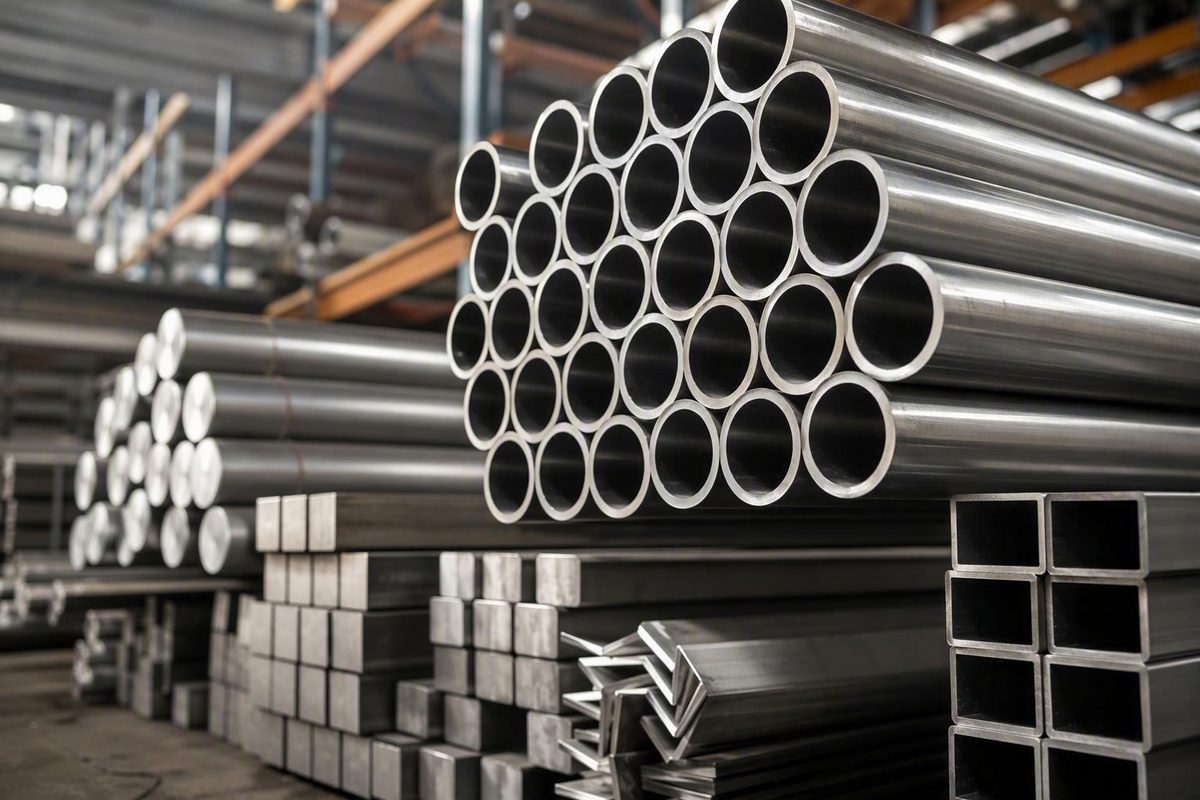
“EN chemical composition” is ambiguous. The request may concern a legacy British grade such as EN8, EN19, or EN24, or it may concern material governed by a current European EN standard.
That distinction matters because a familiar grade name does not establish the applicable chemical limits. Before buying, machining, welding, heat treating, or substituting material, identify the governing standard and edition, product form, delivery condition, and certificate requirements.
This article is a comparison of supplier-reported data, not a substitute for an official standard. Where sources disagree, both entries remain visible. Where a row is malformed, truncated, or ambiguous, it is flagged rather than corrected by inference.
First identify what “EN” means
In names such as EN8, EN19, and EN24, the letters should not be treated as proof that the material complies with a current European EN standard.
Solitaire Overseas associates EN8 with BS 970-1955 and 080M40 with BS 970-1991. It describes EN8 as an unalloyed medium-carbon engineering steel, but its equivalence claims are commercial cross-references rather than official declarations that every listed grade is interchangeable. See the supplier’s EN8 designation and composition table.
Otai Special Steel similarly identifies EN19 as a BS 970-1955 designation and presents 708M40 and 709M40 as later related BS 970-1991 designations. Its international mappings should be treated as unverified commercial cross-references, not as replacements for the applicable standards. Review the supplier’s separate EN19, 708M40, and 709M40 entries.
When someone asks for “EN chemical composition,” begin with four questions:
-
What is the complete grade or standard number? Record punctuation, suffixes, material numbers, and lettered variants exactly.
-
Which standard edition applies? A historical designation, a later redesignation, and a current product standard may not contain identical requirements.
-
What is the product form? Requirements for bar, plate, sheet, strip, tube, pipe, and forgings should not be assumed to be interchangeable.
-
Do you need specification limits or measured certificate chemistry?
Saying “EN24” may communicate a familiar material concept, but it does not fully specify whether the order concerns round bar, plate, tube, or a forging—or what dimensions, condition, properties, tests, and documentation are required.
How to read a chemical-composition table
Composition tables commonly use ranges, maxima, minima, and single figures. These notations are not interchangeable:
- 0.35–0.45 is a range defining lower and upper limits as presented in the table. The governing specification determines which analysis those limits apply to and whether any permitted variation applies.
- 0.06 max is an upper limit. It is not a target and does not mean every heat contains 0.06.
- 0.20 min is a lower limit when explicitly marked as such.
- An unqualified single figure such as 0.05 is ambiguous unless the table or governing document explains whether it is a maximum, minimum, nominal value, or another requirement.
A range is not a nominal value, and neither a range nor a maximum is a measured result. Keep these four categories separate:
- Specification limits: permitted boundaries established by the applicable specification.
- Nominal chemistry: a representative or target composition, not necessarily a mandatory limit.
Do not invent tolerances between heat and product analyses. If permitted variation matters, retrieve it from the governing product specification and applicable edition.
The element abbreviations used here are:
- C: carbon
- Mn: manganese
- Si: silicon
- S: sulfur
- P: phosphorus
- Cr: chromium
- Ni: nickel
- Mo: molybdenum
The Stainless Steel Industry of North America explicitly labels its stainless table as weight percent and states that entries are maxima unless a range or minimum is shown. It also warns that requirements can vary with the product and specification. See SSINA’s notation and stainless-composition tables.
That clarity is not present in every online table. The broad legacy-grade table used below does not explicitly state its units. Its figures therefore remain labeled as supplier-reported and unit-unspecified; they are not represented here as independently verified weight percentages.
Blank cells and dashes are equally important. They do not prove zero content. Where a source does not define them, a blank or dash may indicate that no value was supplied, the element was omitted from the table, no limit was stated in the source used, or information was unavailable. Only the governing documentation can resolve the meaning.
Each table below therefore identifies the grade, source-reported values, notation, source, and a verification or data-quality note.
Supplier-reported composition of common legacy EN grades
Supplier-reported values—not verified official specification limits.
The following reference transcribes selected rows from Saaj Steel’s commercial EN-series table. The page does not state units, cite an official standard or edition, identify a product form or analysis method, or explain its blank cells. It also contains malformed entries elsewhere and is truncated during EN354. These values are discovery data, not purchasing limits. View the underlying commercial EN-series composition table.
| Grade | Source-reported values | Notation | Source | Verification or data-quality note |
|---|---|---|---|---|
| EN8 | C 0.35–0.45; Mn 0.60–1.00; Si 0.05–0.35; S 0.06 max; P 0.06 max | Ranges and maxima; units unstated | Saaj Steel table | Conflicts slightly with the explicitly percent-based EN8 source discussed below |
| EN8D | C 0.40–0.45; Mn 0.70–0.90; Si 0.05–0.35; S 0.06 max; P 0.06 max | Ranges and maxima; units unstated | Saaj Steel table | No standard edition or product form identified |
| EN9 | C 0.50–0.60; Mn 0.50–0.80; Si 0.05–0.35; S 0.06 max; P 0.06 max | Ranges and maxima; units unstated | Saaj Steel table | Supplier-reported only |
| EN16 | C 0.30–0.40; Mn 1.3–1.8; Si 0.10–0.35; S 0.05 max; P 0.05 max; Mo 0.20–0.35 | Ranges and maxima; units unstated | Saaj Steel table | Supplier-reported only |
| EN18 | C 0.35–0.45; Mn 0.60–0.95; Si 0.10–0.30; S 0.05 max; P 0.05 max; Cr 0.85–1.15 | Ranges and maxima; units unstated | Saaj Steel table | Supplier-reported only |
| EN24 | C 0.35–0.45; Mn 0.45–0.70; Si 0.10–0.35; Cr 0.90–1.40; Ni 1.3–1.8; Mo 0.20–0.35 | Ranges; units unstated | Saaj Steel table | Governing standard, edition, form, and method absent |
| EN25 | C 0.27–0.33; Mn 0.50–0.70; Si 0.10–0.35; Cr 0.50–0.80; Ni 2.3–2.8; Mo 0.40–0.70 | Ranges; units unstated | Saaj Steel table | Supplier-reported only |
| EN31 | C 0.90–1.20; Mn 0.30–0.75; Si 0.10–0.35; S 0.05 max; P 0.05 max; Cr 1.0–1.6 | Ranges and maxima; units unstated | Saaj Steel table | Supplier-reported only |
| EN36B | C 0.12–0.18; Mn 0.30–0.60; Si 0.10–0.35; Cr 0.60–1.1; Ni 3.0–3.75 | Ranges; units unstated | Saaj Steel table | Blank S and P cells do not prove zero content |
| EN41B | Alloying entry unresolved | Malformed or misaligned annotation | Saaj Steel table | An aluminum annotation appears under a V-labeled column; no Al or V limit can safely be asserted |
| EN42 | C 0.70–0.85; Mn 0.55–0.75; Si 0.10–0.40; S 0.05 max; P 0.05 max | Ranges and maxima; units unstated | Saaj Steel table | Supplier-reported only |
| EN45A | C 0.55–0.65; Mn 0.70–1.00; Si 1.7–2.0; S 0.05 max; P 0.05 max | Ranges and maxima; units unstated | Saaj Steel table | Supplier-reported only |
| EN353 | C 0.20 max; Mn 0.50–1.0; Si 0.35 max; S 0.05 max; P 0.05 max; Cr 0.75–1.25; Ni 1.0–1.5; Mo 0.08–0.15 | Ranges and maxima; units unstated | Saaj Steel table | Supplier-reported only |
The EN41B row illustrates why a table should not be “repaired” by intuition. The source places an aluminum annotation beneath a column labeled V. This may reflect a shifted column, an embedded note, or another formatting defect, but the available evidence does not resolve it. Assigning the displayed entry definitively to aluminum or vanadium would create a claim not established by the source.
The other rows are more legible, but that does not elevate them to official requirements. Units remain unstated, blanks remain unexplained, and no product form or standard edition is attached. Malformed values elsewhere on the page and truncation during EN354 reduce confidence in the table as a whole.
Use this table to locate a grade and frame a verification request—not to release material, approve a substitution, or write a purchase specification.
EN8 and EN8D: a discrepancy-aware comparison
EN8 demonstrates why online composition values must remain attached to their sources. Saaj Steel and Solitaire Overseas report similar but nonidentical carbon entries, and they present sulfur and phosphorus differently. Solitaire’s values and historical designation claims are explicitly stated in its EN8 supplier article.
| Grade and source | Source-reported values | Notation | Source | Verification or data-quality note |
|---|---|---|---|---|
| EN8, broad table | C 0.35–0.45; Mn 0.60–1.00; Si 0.05–0.35; S 0.06 max; P 0.06 max | Units unstated; S and P explicitly marked maximum | Saaj Steel table cited above | No cited standard edition, form, or test method |
| EN8, dedicated article | C 0.36–0.44%; Mn 0.60–1.00%; Si 0.05–0.35%; P 0.015–0.06%; S 0.015–0.06% | Explicit percentages and ranges | Solitaire Overseas article | Supplier article; verify against the applicable specification |
| EN8D, broad table | C 0.40–0.45; Mn 0.70–0.90; Si 0.05–0.35; S 0.06 max; P 0.06 max | Units unstated; ranges and maxima | Saaj Steel table cited above | No second EN8D source is available here for comparison |
The sources agree on their displayed manganese and silicon intervals for EN8, but not on the carbon endpoints or the presentation of sulfur and phosphorus. Those entries should not be averaged, widened, or silently converted into one “accepted” composition. The correct response is to determine which standard, edition, product form, and analysis basis control the order.
Solitaire Overseas describes EN8 as an unalloyed medium-carbon engineering steel and associates it with 080M40 as a later BS 970 designation. It lists shafts, axles, gears, bolts, studs, spindles, automotive components, and general engineering parts as example uses. These examples provide context, but they do not establish that a particular piece of EN8 is suitable for a specific load, geometry, service environment, or manufacturing route.
EN8D is a separate row in the broad table. Its suffix should not be discarded during a lookup: the displayed carbon and manganese intervals differ from those in that table’s EN8 row. “EN8” and “EN8D” should remain distinct entries until the governing documentation establishes how each applies.
Supplier heat-treatment and welding instructions are intentionally not generalized here.
EN19, 708M40, and 709M40 are related but not identical rows
Otai Special Steel describes EN19 as a chromium-molybdenum alloy steel and presents it as the older BS 970-1955 designation, with 708M40 and 709M40 shown as later related designations. The supplier’s percent-based rows overlap, but they are not chemically identical. See the supplier’s BS 970 comparison and chemistry rows.
| Grade | Source-reported values | Notation | Source | Verification or data-quality note |
|---|---|---|---|---|
| BS 970-1955 EN19 | C 0.35–0.45%; Mn 0.50–0.80%; Si 0.10–0.35%; Cr 0.90–1.50%; Mo 0.20–0.40%; P 0.05%; S 0.05% | Ranges plus unqualified single P and S figures | Otai supplier guide | P and S are not explicitly labeled as maxima |
| 708M40 | C 0.36–0.44%; Mn 0.70–1.00%; Si 0.10–0.40%; Cr 0.90–1.20%; Mo 0.15–0.25%; P 0.035%; S 0.035% | Ranges plus unqualified single P and S figures | Otai supplier guide | Supplier-reported later BS 970 row |
| 709M40 | C 0.36–0.44%; Mn 0.70–1.00%; Si 0.10–0.40%; Cr 0.90–1.20%; Mo 0.25–0.35%; P 0.035%; S 0.035% | Ranges plus unqualified single P and S figures | Otai supplier guide | Supplier-reported later BS 970 row |
The reported differences affect manganese, chromium, molybdenum, phosphorus, and sulfur. In particular, the molybdenum intervals distinguish the two later rows, while the older EN19 row has a broader chromium interval and different displayed manganese limits.
The supplier does not label the single phosphorus and sulfur figures as maxima. Although specifications often express such requirements as upper limits, that convention must not be inserted into an unlabeled commercial table as though the source stated it.
The same page links EN19 with 42CrMo4, 1.7225, AISI 4140, SCM440, and other international designations. These are supplier cross-references, not proof of exact interchangeability. Chemistry limits may differ, while substitution can also be controlled by product specification, dimensions, delivery condition, cleanliness, hardenability, mechanical properties, testing, and certification.
Mechanical-property and heat-treatment conclusions are omitted because the supplier’s property information is not consistently tied to a clearly defined condition and section size. It cannot safely be converted into a universal guarantee.
Why EN24 needs an especially clear source label
The available numerical EN24 row comes from the broad commercial table discussed earlier. Saaj Steel reports C 0.35–0.45, Mn 0.45–0.70, Si 0.10–0.35, Cr 0.90–1.40, Ni 1.3–1.8, and Mo 0.20–0.35, but does not provide explicit units, a governing standard, an edition, a product form, or an analysis method. Review the commercial table containing the EN24 row.
| Grade | Source-reported values | Notation | Source | Verification or data-quality note |
|---|---|---|---|---|
| EN24 | C 0.35–0.45; Mn 0.45–0.70; Si 0.10–0.35; Cr 0.90–1.40; Ni 1.3–1.8; Mo 0.20–0.35 | Ranges; units unstated | Saaj Steel table | Commercial data only; official limits not established |
| EN24 publication figure | Numerical values not transcribed in the supplied page text | Figure titled “Chemical composition of EN 24” | ResearchGate repository page | Confirms that a figure exists but provides no usable text values |
A ResearchGate repository page confirms the existence of a publication figure titled “Chemical composition of EN 24,” associated with a January 2016 article about drilling EN-24 steel plates. The page text does not transcribe the numerical values, identify an applicable EN24 specification, or establish whether the figure contains limits, nominal values, or measured data. No chemistry should be inferred from the image for this reference. See the repository page for the EN24 composition figure.
The associated article excerpt identifies shafts, axles, gears, and fasteners as EN24 applications. Those examples do not validate chemical limits or demonstrate suitability for a particular component.
Before using EN24 chemistry for procurement, welding, heat treatment, or substitution, obtain the applicable official specification or purchase-specific requirements and compare them with the delivered material certificate. A familiar application list and plausible-looking composition row are not controlled material documentation.
If the reader means stainless steel under an EN specification
Common stainless labels such as 304L and 316L do not, by themselves, answer a question about compliance with a modern EN standard. The stainless data available here are ASTM- or UNS-oriented context. They help explain grade labels and notation but do not establish compliance with an EN tubing specification.
SSINA explicitly presents its table in weight percent and states that entries are maxima unless shown as ranges or minima. It recommends specifying the applicable ASTM standard and the alloy’s UNS number and warns that chemistry can vary with product requirements. Its underlying data primarily draw from specifications for plate, sheet, strip, and bar, so tubing requirements still need to be checked against the relevant tubing specification. See SSINA’s stainless composition reference.
| Grade | Source-reported values | Notation | Source | Verification or data-quality note |
|---|---|---|---|---|
| 304, UNS S30400 | C 0.08% max; Cr 18.0–20.0%; Ni 8.0–10.5%; N 0.10% max; Mn 2% max | Weight percent; maxima unless range shown | SSINA | ASTM/UNS-oriented context, not proof of EN tubing compliance |
| 304L, UNS S30403 | C 0.03% max; Cr 18.0–20.0%; Ni 8.0–12.0%; N 0.10% max; Mn 2% max | Weight percent; maxima unless range shown | SSINA | Product-specific requirements still need checking |
| 316, UNS S31600 | C 0.08% max; Cr 16.0–18.0%; Ni 10.0–14.0%; Mo 2.0–3.0%; N 0.10% max; Mn 2% max | Weight percent; maxima unless range shown | SSINA | ASTM/UNS-oriented context, not proof of EN tubing compliance |
| 316L, UNS S31603 | C 0.03% max; Cr 16.0–18.0%; Ni 10.0–14.0%; Mo 2.0–3.0%; N 0.10% max; Mn 2% max | Weight percent; maxima unless range shown | SSINA | Product-specific requirements still need checking |
In this table, the “L” versions have lower carbon maxima than 304 and 316. Both listed 316 grades include molybdenum in the same displayed range.
A second commercial source illustrates why even familiar stainless labels must be tied to a specification. SSP reports 16.5–18.5% chromium and 10.0–13.0% nickel for 316 and 316L, rather than SSINA’s wider but differently bounded entries. SSP also reports carbon limits of 0.08% for 316 and 0.03% for 316L. Compare SSP’s commercial 316 and 316L composition chart.
Do not average the competing chromium or nickel ranges. First identify the governing specification, edition, product form, and complete alloy designation.
No unsupported EN material-number mapping is supplied here for 304, 304L, 316, or 316L. A tubing buyer should request the complete alloy identifier and applicable product-specific standard—not merely “304L tube” or “316L pipe.”
A verification checklist for selection and purchasing
Before acting on an online EN chemical-composition table, verify all of the following:
- [ ] Complete designation: Record the full grade, suffix, material number, or other identifier exactly.
- [ ] Governing standard: Name the product and material specification rather than relying on a familiar grade label.
- [ ] Standard edition: State the required year, revision, or contractual edition.
- [ ] Product form: Identify bar, plate, sheet, strip, tube, pipe, forging, or another form.
- [ ] Delivery condition: State whether the material is untreated, normalized, annealed, quenched and tempered, cold drawn, solution treated, or supplied in another defined condition.
- [ ] Dimensions: Include diameter, wall thickness, section size, plate thickness, or other controlling dimensions.
- [ ] Required mechanical properties: Define the properties, test orientation, test location, and dimension-dependent requirements through the applicable specification.
- [ ] Chemistry notation: Determine whether each figure is a minimum, maximum, range, nominal value, or measured test result.
- [ ] Inspection requirements: State required tests, sampling, witnessing, supplementary examinations, and acceptance criteria.
- [ ] Material certificate: Specify the required inspection document and confirm that it identifies the material, heat, applicable specification, and reported results.
When the certificate arrives, compare its measured heat chemistry with the applicable specification limits. Do not assume an online table describes the delivered heat. If product analysis is required, apply only the sampling rules, permitted variation, and acceptance criteria defined by the governing documents.
Preserve source disagreements. If two sources report different EN8 carbon intervals, retain both with their notation and attribution rather than averaging them. If a row is malformed, shifted, truncated, or internally inconsistent, classify it as unresolved rather than correcting it by guesswork.
Matching or overlapping chemistry does not, by itself, prove that two grades are substitutes. A chemical match answers only part of a substitution question.
Product form deserves particular attention. Chemistry presented for plate, sheet, strip, or bar should not automatically be applied to tubing. The correct tubing or pipe standard may impose different requirements or incorporate different testing and delivery provisions.
As a conservative editorial recommendation, decisions involving safety-critical components, welding, heat treatment, procurement, or material substitution should be based on the applicable official documents and qualified engineering review rather than an online comparison alone. Separately, Tubing Chart’s terms describe its content as general information supplied as-is. Read Tubing Chart’s informational-use terms.
A concise purchase description can follow this structure:
[full grade/designation], to [product standard and edition], [product form], [condition], [dimensions], with [inspection certificate and required properties].
Frequently asked questions
Is EN8 the same as 080M40, C45, or AISI 1040?
Not in the unrestricted sense of “the same.”
The cited EN8 supplier associates EN8 with BS 970-1955 and 080M40 with BS 970-1991. It also cross-references C40, C45, 1038, 1040, 1045, and other grades. Those associations may help with searches across national systems, but they do not establish identical chemistry, mechanical requirements, product forms, or delivery conditions.
Treat 080M40 as a historically related later designation in that supplier’s scheme. Treat C45 and AISI 1040 as cross-references requiring comparison under their own governing standards. Substitution approval should address the complete specification, condition, dimensions, properties, tests, and certificate—not merely the grade-name association.
What is the reported difference between EN8 and EN8D chemistry?
In the Saaj Steel table reproduced above, EN8D has a higher displayed lower bound for carbon and a narrower manganese interval than EN8. The displayed silicon, sulfur, and phosphorus entries are the same. The source does not explicitly state units or identify the governing standard edition and product form.
The separately cited Solitaire Overseas article reports a different EN8 carbon interval and presents sulfur and phosphorus as ranges rather than maxima. The exact figures are retained in the EN8 comparison table above. The discrepancy should remain visible until the applicable specification resolves it.
Are EN19, 708M40, 709M40, 42CrMo4, and AISI 4140 interchangeable?
Not automatically.
The cited supplier reports separate compositions for EN19, 708M40, and 709M40. The displayed differences include manganese, chromium, molybdenum, phosphorus, and sulfur. In particular, 708M40 and 709M40 have different molybdenum intervals, as shown in the cited comparison table.
The same supplier links those grades with 42CrMo4, AISI 4140, SCM440, and other designations, but such links are commercial cross-references. Interchangeability requires comparison of the governing product standards, including chemistry, properties, condition, dimensions, testing, and certification.
Do blank cells in an EN chemical-composition table mean an element is absent?
No. A blank cell or dash does not prove zero content.
In the broad legacy-grade table, blanks and dashes are unexplained. They may represent an omitted value, unavailable information, an unstated requirement, or a formatting limitation. In the stainless reference, some elements are excluded from the table entirely, and a dash is not defined as chemical absence.
Do not convert a blank into “0%.” Check the applicable specification, table notes, and material certificate.
Can ASTM or UNS chemistry for 304L or 316L prove compliance with an EN tubing standard?
No. ASTM- or UNS-oriented chemistry can help identify and compare alloys, but it does not by itself establish compliance with a particular EN tubing standard.
Compliance requires the complete applicable product standard and edition, alloy designation, product form, delivery condition, dimensions, inspection requirements, and material documentation. This is especially important when a chemistry table was compiled primarily from plate, sheet, strip, or bar specifications rather than a tubing specification.
Use this article as a starting point, not a purchasing specification. First determine whether the request concerns a legacy BS 970 grade or a current European standard. Then attach every composition value to its source, units, limit type, edition, and product form. Supplier data can support cautious comparisons—particularly EN8 versus EN8D and EN19 versus 708M40 versus 709M40—but conflicting ranges, unresolved notation, and approximate equivalence claims leave the applicable official standard and delivered material certificate as the final authorities.