
High Carbon Stainless Steel: Grades, Hardness and Tube Selection
Compare 440A, 440B and 440C with 304L and 304H, then check heat treatment, corrosion exposure and product standards before specifying tubing.
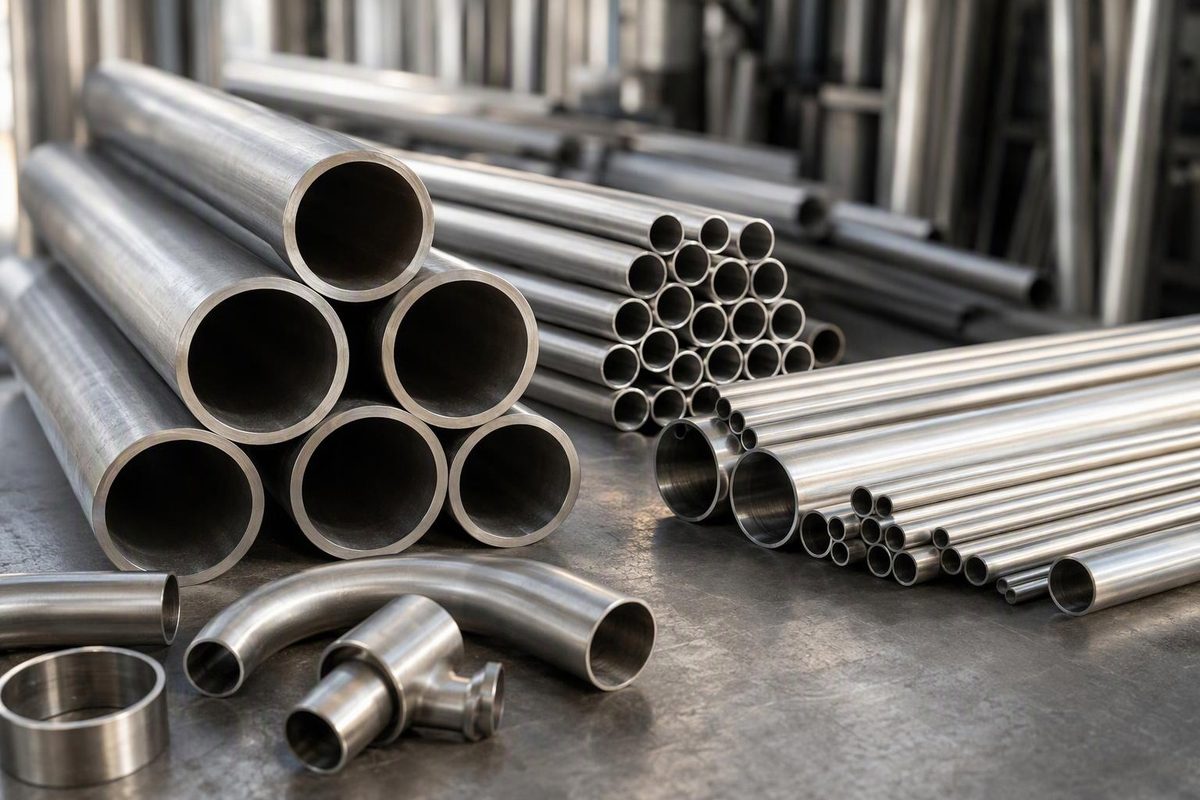
“High carbon stainless steel” describes a material characteristic, not a complete purchasing specification. For a hard, wear-resistant component, 440C is a clear example: it contains 0.95–1.20% carbon by weight and 16–18% chromium, and is typically used in the hardened-and-tempered condition. Carpenter identifies it as UNS S44004 and reports heat-treated hardness of about 60 HRC—Rockwell C. Carpenter 440C alloy data
For tubing, do not treat that description as an upgrade over 304L or as another name for 304H. Grade, product standard and heat-treatment condition must agree with the service.
Which grades does the term describe?
The 440 series illustrates the relationship between carbon content and attainable hardness. The 304 variants show why “higher carbon” can mean something quite different in another stainless family.
| Grade | Carbon, weight % | Family | Selection significance |
|---|---|---|---|
| 440A | 0.60–0.75 | Martensitic | Lower attainable hardness than 440C; generally somewhat higher corrosion resistance |
| 440B | 0.75–0.95 | Martensitic | Lower attainable hardness than 440C; generally somewhat higher corrosion resistance |
| 440C / S44004 | 0.95–1.20 | Martensitic | High hardness and wear resistance after appropriate heat treatment |
| 304L / S30403 | 0.030 maximum | Austenitic | Low carbon reduces carbide precipitation during welding |
| 304H / S30409 | 0.04–0.10 | Austenitic | Controlled carbon supports elevated-temperature strength and creep resistance |
Sources: 440-series comparison, Carpenter 440C chemistry, Sandmeyer 304L data and Sandmeyer 304H data. These are grade-comparison values; verify the chemistry requirements in the product standard used for the order. Corrosion performance also depends on heat treatment and exposure.
304H is not the same material choice as high-carbon martensitic stainless. Its carbon range is much lower than 440C’s, and its purpose is elevated-temperature performance rather than the bearing or cutting-edge hardness associated with 440C.
Hardness depends on condition, not just chemistry
A 440C label does not mean the supplied material is already near 60 HRC. Thames Stockholders lists its 440C round bar with maximum supply-condition hardnesses of 269 HBW for hot-finished and 285 HBW for cold-finished material, versus 58 HRC minimum after heat treatment. HBW denotes Brinell hardness; HRC denotes Rockwell C. Those are the supplier’s published values, not a universal guarantee for every 440C product. Thames 440C datasheet
Specify whether you need annealed stock for machining or a finished hardened-and-tempered component. Machining becomes substantially more difficult after hardening. A hardness requirement also needs a test scale and an acceptance point: incoming stock and the finished component are different checks.
Corrosion and welding are separate checks
High carbon does not mean rust-proof. Thames describes 440C as offering moderate corrosion resistance for applications such as bushes, bearings and valve parts. Carpenter warns that its corrosion resistance is reduced in the annealed condition or when hardened and tempered above about 800°F (427°C). Heat treatment therefore affects both hardness and corrosion performance. Thames application data; Carpenter condition limits
The carbon tradeoff also matters in welded austenitic stainless. Sandmeyer notes that 304H can develop chromium carbides in the weld heat-affected zone, creating susceptibility to intergranular corrosion. The lower carbon content of 304L reduces that risk; it does not make 304L immune to every corrosion mechanism. 304H welding guidance; 304L corrosion guidance
Nor should a routine 304 welding procedure be assumed suitable for 440C. Published 440C guidance calls for preheating and subsequent heat treatment when welding is required. Establish the procedure and final properties before choosing the material. 440C fabrication guidance
What to specify for tubing or related parts
ASTM A269/A269M-25 covers seamless and welded austenitic stainless tubing for general service. Its scope does not make martensitic 440C an interchangeable A269 tube grade. Likewise, a 440C round-bar datasheet does not establish tube availability, tolerances or pressure suitability. ASTM A269/A269M scope
Before accepting a quote, define:
- Service: fluid or atmosphere, temperature, corrosion exposure and whether wear is actually the controlling requirement.
- Material: exact grade or UNS designation, applicable product standard and permitted substitutions.
- Product form and dimensions: tube, pipe or bar; tube outside diameter, wall thickness, length and tolerances. Keep required inside clearance separate from OD, and do not substitute a pipe schedule for a tube wall dimension.
- Condition and fabrication: annealed or hardened-and-tempered, required hardness, machining sequence and welding requirements.
- Finish and verification: surface finish, material test report, heat traceability and any final hardness or corrosion acceptance tests.
If the intended comparison is ordinary carbon-steel tube versus stainless tube—not higher-carbon grades within the stainless family—use the separate steel and stainless tubing comparison.