
Does Surgical Steel Have Nickel? Grades and Verification
316L and implant-grade 316LVM contain nickel. Compare their composition, distinguish nickel content from release, and check material documentation.
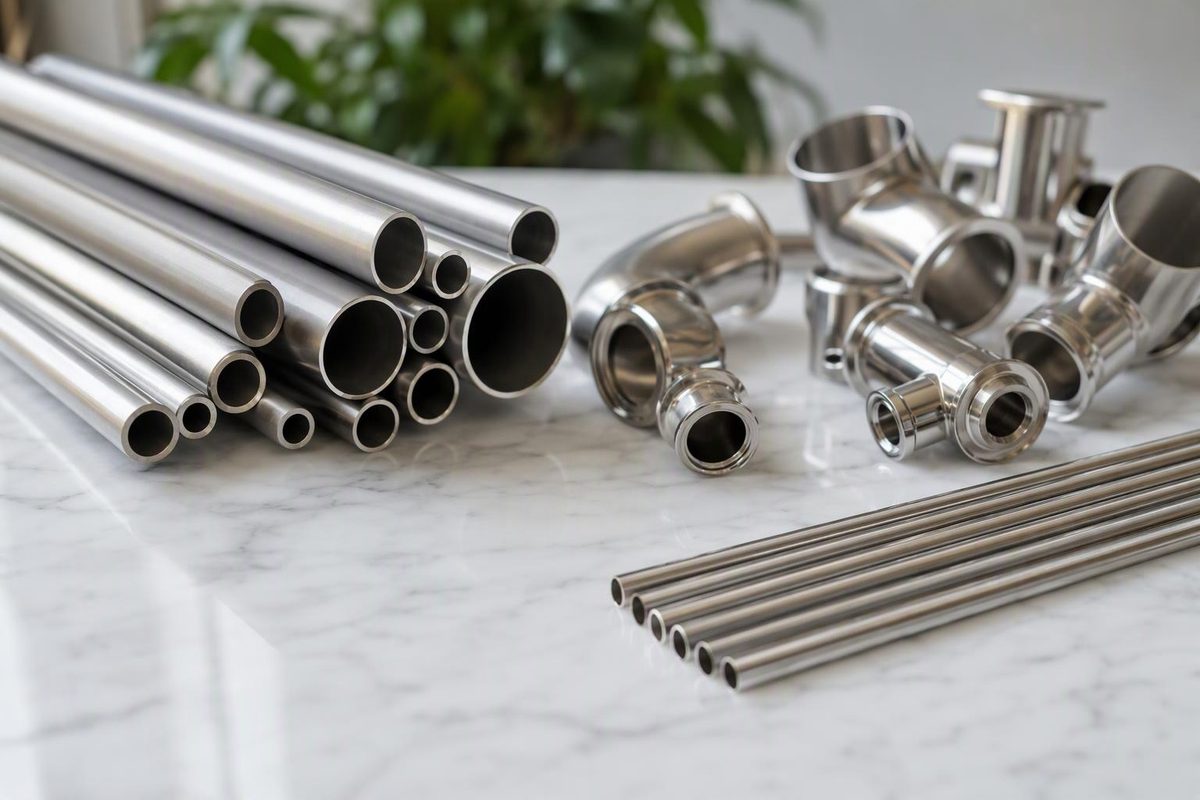
Yes—common stainless steels sold as “surgical steel” contain nickel. The label does not identify one alloy or guarantee a nickel-free product. The Association of Professional Piercers (APP) describes surgical steel as a variety of alloys and distinguishes specific documented materials from the general label. APP material guidance
For a useful answer, ask for the grade, material standard and supporting certificate, rather than relying on “surgical,” “medical-grade” or “hypoallergenic” alone.
How much nickel is in it?
These are composition ranges by mass—not measurements of nickel released onto skin.
| Material identification | Nickel content | What the identification tells you |
|---|---|---|
| 316L, UNS S31603, in the cited ASTM A240 plate, sheet and strip data | 10.00–14.00% | A low-carbon stainless grade; not proof of implant suitability |
| 316LVM, UNS S31673, in the cited ASTM F138 data | 13.00–15.00% | An implant-alloy composition that still deliberately includes nickel |
| “Surgical steel,” with no grade or standard | Not established | Insufficient information to assign a percentage or verify suitability |
Sources: Brown Metals’ 316/316L composition table and Fort Wayne Metals’ 316LVM composition table.
The “L” in 316L refers to low carbon, not low nickel. Brown Metals lists the same 10–14% nickel range for 316 and 316L, while lowering the maximum carbon from 0.08% to 0.030%. Fort Wayne Metals describes vacuum arc remelting of its 316LVM to improve homogeneity and microcleanliness—not to remove nickel. 316/316L data · 316LVM processing data
Nickel content is not nickel release
Nickel content describes the alloy’s bulk chemistry. Nickel release describes how much leaves the material under particular exposure conditions. A nickel-containing stainless steel can have low measured release; that does not make it chemically nickel-free.
The British Stainless Steel Association reports low nickel-release results for several common stainless grades in synthetic-sweat tests. Those results should not be treated as a guarantee for every finished product or wearer. BSSA skin-contact guidance
If you have a known nickel allergy, do not assume the surgical-steel label makes a product suitable. For piercing jewelry, the APP identifies titanium as an option for people concerned about nickel sensitivity, including documented ASTM F136 implant titanium or ASTM F67 commercially pure titanium. Persistent or unexplained skin reactions warrant medical advice. APP titanium guidance · Mayo Clinic nickel-allergy guidance
What to check before buying or specifying
- Exact alloy: Request the grade and UNS designation. A bare “316L” description does not establish ASTM F138 compliance.
- Applicable standard and product form: ASTM F138 covers chemical, mechanical and metallurgical requirements for surgical-implant bar and wire. It is not a general tubing specification. ASTM F138 scope
- Documentation: Ask for a material certificate and traceability to the supplied stock or component. The APP recommends reviewing mill certificates but notes that having a certificate alone does not prove a particular jewelry piece came from that batch. APP documentation guidance
- Finished-product suitability: For body jewelry, material identification is only part of selection; the APP also addresses surface finish, dimensions and construction. For tubing, specify OD, wall thickness, grade, finish and the applicable tube standard separately.
If a listing claims both 316L or ASTM F138 steel and “nickel-free,” ask the supplier to reconcile the claim with the documented chemistry. Low nickel release and no nickel in the alloy are different claims.