
Section 232 Tariff: Full Value or Steel Content?
See when Section 232 applies to full customs value, steel content, or non-U.S. content, then estimate 50%, 25%, 15%, or 10% duty.
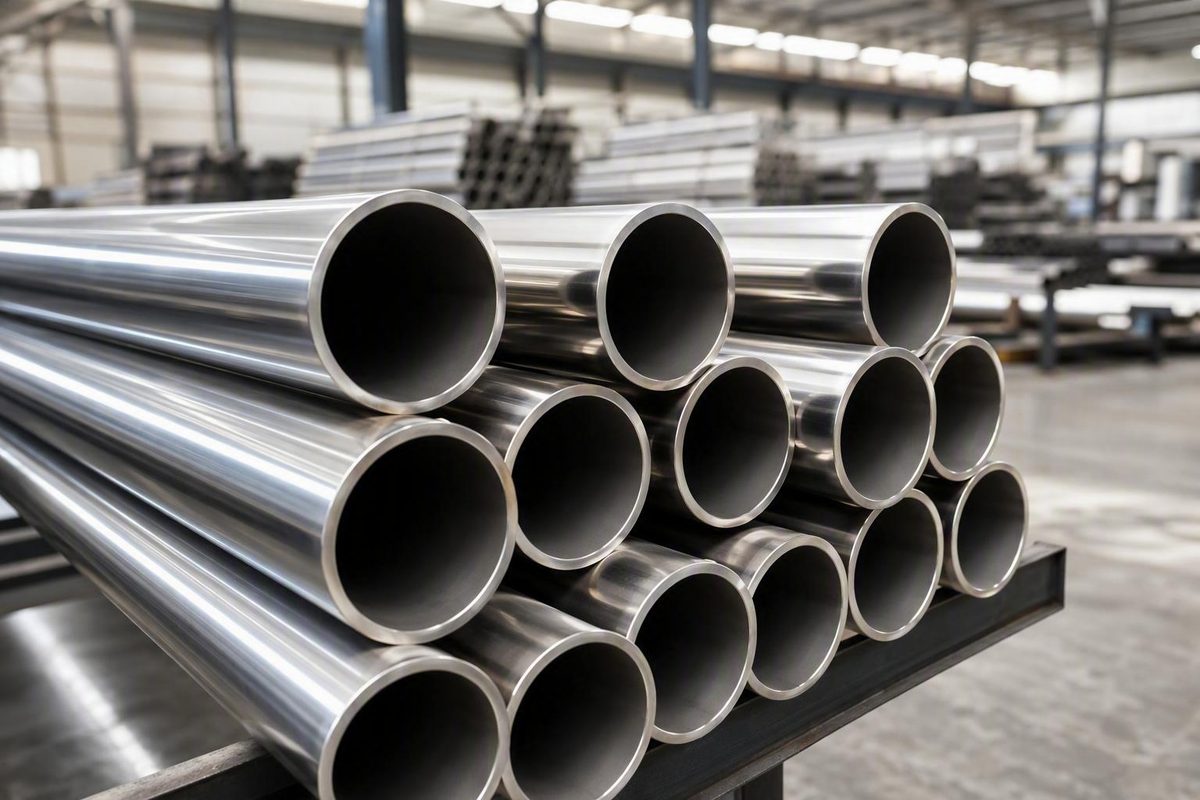
For covered steel articles and derivatives entered from April 6, 2026, the Section 232 duty is generally charged on the article’s full customs value, not only its steel content. The main alternatives are a 25% levy on non-U.S. content for specified qualifying USMCA goods, limited 0% low-metal treatment, and classification-specific exceptions. Coverage and the applicable 50%, 25%, 15%, or 10% rate must be established separately.
Proclamation 11021 made the full-value rule effective for covered merchandise entered for consumption, or withdrawn from warehouse for consumption, beginning April 6, 2026. It applies regardless of how much of the article’s value comes from metal. The Federal Register publication of Proclamation 11021 contains the proclamation and annexes.
An imported tube assembly, fitting, rack, machine part, or HVAC component is not covered merely because it contains stainless steel. Its exact 10-digit HTSUS classification must fall within an operative Section 232 provision, and no controlling exclusion or special treatment can remove it.
Enter the line-item facts; the calculator shows the current base, Section 232 duty, and a steel-content-only comparison.
Use the legally confirmed schedule for the line item. Dollar results exclude Section 301, antidumping, countervailing, and other duties.
Estimated Section 232 duty: $5,000.00
Annex I-A estimate: 50% × full customs value. The steel-value comparison applies the same rate to $3,000 solely to show the effect of changing the base.
Confirm that the exact 10-digit HTSUS classification appears in Annex I-A.
| Treatment | Rate | Base | Conditions to Verify |
|---|---|---|---|
| Annex I-A article | 50% | Full customs value | Covered classification; no exception |
| Annex I-B derivative | 25% | Full customs value | Covered classification; no exception |
| Covered UK treatment | 25% | Full customs value | Applicable UK provision |
| Transitional Annex III | 15% | Full customs value | Specified category; generally through Dec. 31, 2027 |
| Specified U.S.-metal treatment | 10% | Full customs value | Correct provision, U.S. melt/pour, applicable 85%-by-weight test |
| Specified Annex I-C USMCA good | 25% | Non-U.S. content | USMCA qualification and 15% minimum effective duty |
| Qualifying low-metal pathway | 0% | — | Outside Chapters 72, 73, 74, 76; aggregate covered metal below 15% by weight |
| Not covered | 0% | — | HTSUS classification absent from controlling coverage |
Sources: Proclamations 11021 and 11032, their annexes, and CBP filing instructions. Figures are estimates; “—” means no dutiable base under the selected treatment.
The calculator is an estimating aid, not a classification tool. A product description cannot establish its HTSUS code, annex placement, USMCA qualification, or eligibility for U.S.-metal or low-metal treatment. Those determinations require the entry documents and current tariff provisions.
Why Older Guidance Uses Steel-Content Value
Both answers appear in search results because the rules changed.
| Entry Period | General Treatment | Practical Effect |
|---|---|---|
| 2025 | Many listed derivatives used supported steel-content value | Unsupported content could leave total entered value exposed |
| From April 6, 2026 | Covered articles generally use full customs value | Non-metal value is generally included |
| From June 8, 2026 | Full value continued with new rates and exceptions | Annex, origin, and qualification matter |
CBP’s August 2025 instructions applied steel-content reporting to specified additional derivatives beginning August 18, 2025. When the importer could not support a lower steel-content value, duty could be assessed on total entered value. See CBP’s August 2025 filing guidance.
That fallback did not mean every derivative was legally subject to full-value assessment. It meant the importer had not substantiated the smaller base permitted under the applicable instructions.
Proclamation 11021 then shifted covered steel, aluminum, and copper articles and derivatives to full-customs-value treatment. It was issued April 2, published April 9, and applied from April 6, 2026.
A further proclamation modified the schedule for entries beginning June 8, 2026. It changed coverage, rates, origin rules, and qualification-based treatments without restoring a universal steel-content method. The June 2026 proclamation and tariff modifications must be read with their annexes.
The controlling date is generally the date merchandise is entered for consumption or withdrawn from warehouse for consumption. An invoice, purchase order, manufacturing date, departure date, or arrival date does not by itself select the tariff regime.
Coverage Comes Before Value or Rate
A Section 232 calculation has three separate decisions:
- Scope: Is the exact imported article covered?
- Duty base: Is duty charged on full customs value, permitted steel-content value, or qualifying non-U.S. content?
- Rate: Which percentage applies to that base?
Begin with the exact 10-digit HTSUS classification. Descriptions such as “stainless tube,” “fabricated fitting,” or “steel machine part” are not precise enough.
Identify the corresponding Chapter 99 provision and locate the ordinary classification in the controlling annex. Check other annexes, U.S. notes, exclusions, set rules, and Chapter 98 provisions before calculating duty. CBP confirms that only HTS codes identified by the applicable proclamations are subject to the additional tariff. Its Section 232 steel and aluminum FAQs also address derivatives, sets, and special entries.
The entry file then needs the country of origin, complete material composition, customs value, component values, weights, processing history, and—where relevant—where the steel was melted and poured. Canadian or Mexican origin must not be treated as proof of USMCA qualification.
Some professional summaries differ over the treatment of particular Chapter 73 articles. It is unsafe to assign one valuation method to all Chapter 73 merchandise. Resolve the issue from the exact classification, Chapter 99 provision, annex, operative HTSUS notes, entry date, and current CBP instructions.
Full Value and Steel Content Measure Different Things
Full customs value is the customs value of the covered imported article as a whole. It is not the supplier’s raw-steel line item, steel’s percentage by weight, or the commodity value of the metal.
If a covered article has a customs value of $10,000 and full-value treatment applies, its Section 232 base is $10,000 even if only $3,000 is attributable to steel.
Steel-content value is the value attributable to steel under applicable customs-valuation principles. It cannot ordinarily be produced by multiplying steel weight by a spot-market price. This method was relevant to many derivatives under earlier rules and should be used for a 2026 entry only if a current controlling provision expressly permits or requires it.
Using the same hypothetical article:
- Full customs value: $10,000
- Supported steel-content value: $3,000
- Base under full-value treatment: $10,000
- Base under a valid steel-content rule: $3,000
A bill of materials may support the analysis, but it is not automatically a customs-valuation conclusion.
Non-U.S. content is a third concept. Under the June 2026 special rule for specified Canadian or Mexican goods qualifying for USMCA preference, it generally means total product value minus documented value attributable to U.S.-produced parts.
For example:
- Total product value: $10,000
- Documented U.S.-produced parts: $4,000
- Non-U.S.-content base: $6,000
Non-U.S. content can include foreign steel, other foreign metals, plastics, electronics, subassemblies, and other foreign value. U.S. content can include qualifying U.S.-produced parts that are not steel. It is therefore not another name for steel content.
The Applicable Schedule Sets the Rate
Under the general June 2026 schedule, Annex I-A articles generally face 50% on full value, while Annex I-B articles generally face 25% on full value. Covered UK treatment generally uses 25% on full value.
Specified agricultural equipment, predominantly residential HVAC systems and components, and categories of industrial equipment receive temporary 15% treatment under the transitional schedule. Those provisions are generally scheduled through December 31, 2027, with referenced prior treatment resuming January 1, 2028 unless another action changes the schedule.
Specified derivatives satisfying U.S.-origin metal requirements may receive 10% treatment. The June framework includes provisions using an 85% metal-by-weight threshold together with prescribed melting-and-pouring or similar origin conditions. Foreign manufacture using some U.S. steel does not establish eligibility. The product must be in the correct provision, satisfy its weight and processing tests, and have traceable records.
A reduced rate does not ordinarily reduce the duty base. On a $10,000 full-value base:
- 50% produces $5,000 of Section 232 duty.
- 25% produces $2,500.
- 15% produces $1,500.
- 10% produces $1,000.
These figures exclude ordinary Column 1 duties, Section 301 duties, antidumping duties, countervailing duties, and other charges. Section 232 duty alone is not a complete landed-cost calculation.
Qualifying USMCA Goods Use a Special Base
Specified Annex I-C products of Canada or Mexico that qualify for USMCA preferential treatment generally face a 25% additional duty on non-U.S. content, subject to a 15% minimum total effective duty. The White House text of the June proclamation describes this framework.
Canadian or Mexican origin alone is insufficient. The merchandise must be within the specified product treatment, qualify for USMCA preference, and have documentation supporting the claimed value of U.S.-produced parts.
For a $10,000 qualifying article containing $4,000 of documented U.S.-produced parts, non-U.S. content is $6,000. Applying 25% gives an initial additional duty of $1,500.
The importer must then test the separate minimum-total-effective-duty condition using the methodology in the controlling rule. In this simplified example, 15% of total value is also $1,500 before considering other duty components. That equality does not establish the result for another entry.
Low-Metal Treatment Depends on Aggregate Weight
Certain qualifying goods outside HTS Chapters 72, 73, 74, and 76 may receive 0% treatment when aggregate applicable covered-metal content is below 15% of total article weight. This is a narrow classification- and filing-specific pathway, not a general exemption for products containing little steel.
The test concerns aggregate covered-metal weight. A product containing 12% steel by weight and another 5% of an applicable covered metal may fail because the combined amount is 17%. A statement that a product is “10% steel by value” does not answer a weight-based test.
The importer must confirm the classification, applicable annex or note, chapter restriction, Chapter 99 reporting treatment, total weight, and weight of every covered metal. Supplier records must allow the calculation to be repeated.
Worked Stainless and Fabrication Scenarios
A Covered Article Entered After April 6, 2026
Assume an article entered in August 2026 is correctly classified in Annex I-A, has a $10,000 customs value, and has no exclusion or special treatment. Its Section 232 base is the full $10,000, and the general 50% rate produces $5,000 of additional duty.
The steel’s standalone value is not the base. The importer must still report the correct ordinary HTSUS and Chapter 99 provisions.
A Derivative Entered Under 2025 Instructions
Assume a listed derivative was entered after August 18, 2025 but before April 6, 2026. Its total entered value was $10,000, and the importer supported $3,000 as steel-content value.
Under the applicable historical instructions, the base could be $3,000. If the importer could not support that amount, total entered value could become the practical assessment base. The same product entered in August 2026 cannot automatically reuse the $3,000 figure.
A Mixed-Material Assembly Not Listed
Assume a fabricated assembly contains a steel frame and fasteners, but its correct HTSUS classification does not appear in the controlling annexes. No set or essential-character rule brings it within a covered provision.
On those facts, the assembly does not owe the steel Section 232 duty. There is no duty base to calculate, although ordinary or other special duties may still apply.
A Product Claimed to Use U.S. Steel
A commercial invoice stating “made with U.S. steel” does not establish the 10% treatment. The importer needs the correct annex placement, applicable metal percentage by weight, melting-and-pouring records, foreign-processing details, and records connecting the imported article to that steel.
If an 85% threshold applies, an unsupported supplier statement or value percentage cannot replace the required weight calculation.
Entry Records Must Support the Claimed Treatment
The file should identify the exact 10-digit HTSUS classification, Chapter 99 provision, annex line, customs value, bill of materials, total product weight, covered-metal weights, component values and origins, production history, and the CBP instructions used.
A U.S.-metal claim also needs melting-and-pouring records and traceability through foreign processing. A USMCA non-U.S.-content claim needs qualification records, a component-origin schedule, support for U.S.-produced-part values, and the minimum-duty calculation. A low-metal claim needs component weights and a repeatable aggregate calculation rather than a supplier’s unsupported percentage.
Official proclamation PDFs, complete annexes, current HTSUS notes, and current CBP Cargo Systems Messaging Service instructions should be checked before filing. The CRS overview of the mid-2026 regime is useful for orientation, but it does not replace the operative tariff text.
Commerce’s August 6, 2026 notice requested comments on 14 proposed derivative categories, including specified machinery parts, trailers, cables, fire extinguishers, and filled steel containers. The stated comment deadline was August 27, 2026. The request for comments did not itself impose duties on every proposed category; a final action, HTSUS revision, and filing instructions must be checked.
For a mid-2026 entry, the reliable starting point is full customs value after confirming coverage. Use steel-content value, non-U.S. content, 0% low-metal treatment, or a reduced rate only when the exact provision and supporting records establish eligibility. Classification, valuation, and origin questions should be reviewed entry by entry with a licensed customs broker or customs counsel; this material is general information subject to the site’s informational-use terms.