
Is Heat Tint on Stainless a Weld Defect?
Heat tint can signal reduced corrosion resistance without proving a structural flaw. Learn when stainless weld discoloration requires rejection or cleaning.
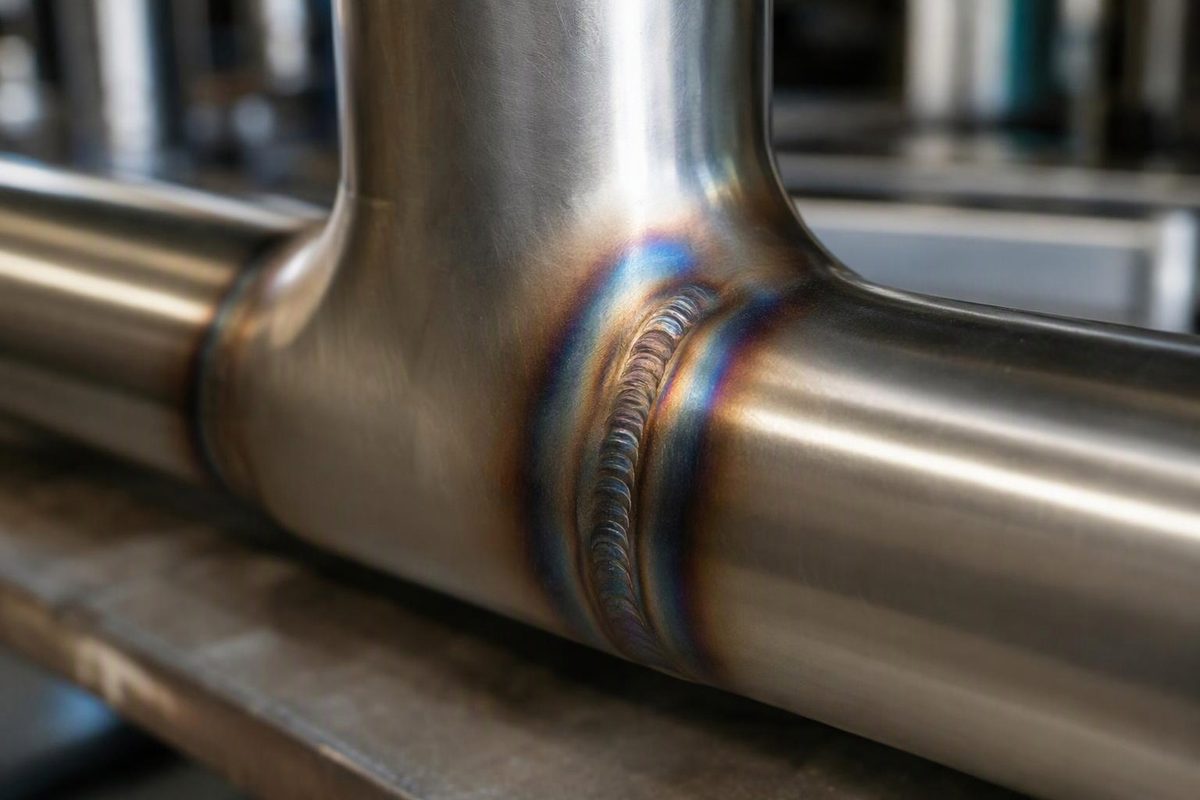
Heat tint is not automatically a weld defect. It is an oxidation-related surface condition. It becomes rejectable when it exceeds the acceptance criteria in the applicable code, drawing, purchase specification or owner requirement—or when the finished surface would not provide the corrosion resistance, hygiene or appearance required in service.
Do not use color alone to accept the weld structurally. Heat tint does not prove or disprove penetration, fusion, cracks, porosity, undercut or dimensional compliance. Those are separate inspection questions.
Select the requirement, service and observed condition to get a practical disposition.
The available information is not enough for acceptance
Identify the governing requirement, service exposure and observed condition. Color alone cannot establish structural weld quality.
Heat-Tint Disposition
Choose the closest conditions. The result is a screening decision, not a substitute for the governing specification.
Source basis: TWI heat-tint guidance and the AWS D18.1/D18.2 descriptions cited in the article. The applicable contract, code and edition control acceptance.
Quick Disposition Guide
| Observation or service | Practical disposition |
|---|---|
| Light tint on a low-corrosion, nonhygienic fabrication with no finish requirement | May be acceptable if the governing documents permit it |
| Any tint where the specified finished condition is color-free or requires complete oxide removal | Reject or hold for the specified post-weld treatment |
| Tint on a product-contact surface in sanitary tubing | Apply the specified sanitary-weld acceptance standard; do not approve it from a generic online color chart |
| Tint exposed to water, chlorides, chemicals or repeated washdown | Treat it as a corrosion concern and use an approved cleaning process appropriate to the service |
| Blue, purple, gray or black oxide, especially on the tube root | Hold for evaluation and cleaning; investigate shielding, purging and heat input |
| Tint plus cracks, incomplete fusion, undercut, burn-through or unacceptable root profile | Evaluate the discontinuity separately; removing the color does not repair it |
Heat Tint Can Reduce Local Corrosion Resistance
During welding, oxygen reacts with the hot stainless surface and thickens its oxide scale. TWI explains that the resulting scale is chromium-rich but not very protective, while the metal immediately beneath it becomes chromium-depleted. Tests in corrosive environments have found heat-tinted surfaces more susceptible to pitting and crevice corrosion (TWI).
Heat tint can therefore be more than a cosmetic rainbow. This is especially important on a tube’s internal weld surface, where the oxide may contact the process fluid even though it is difficult to see or clean.
The inspection questions are:
- Which acceptance document and edition apply?
- Is the tint on the weld face, root or both?
- What medium will contact that surface?
- Is post-weld oxide removal part of the specified finished condition?
- Do the weld profile and any required nondestructive examinations also pass?
There Is No Universal Acceptable Color
A color chart does not provide a universal pass/fail limit. Color results from oxide thickness, but alloy composition, oxygen availability, time at temperature and original surface finish all affect its appearance. The British Stainless Steel Association cautions that there is no single color-to-temperature table valid for every set of conditions (BSSA).
For sanitary austenitic stainless systems, AWS publishes two documents with different functions:
- AWS D18.1/D18.1M:2020 specifies welding requirements for austenitic stainless tube and pipe systems in dairy and other food-processing plants, including visual examination and acceptance criteria.
- AWS D18.2:2020 is a visual guide showing internal tube discoloration produced with increasing oxygen in the backing gas. AWS describes it as a specifying and visual-examination tool (AWS D18 Committee).
The chart helps identify a discoloration level; the contract or applicable standard must establish what level is permitted. A sanitary-tube criterion should not automatically be imposed on an architectural bracket, and an architectural finish requirement cannot approve product-contact tubing.
Color Helps Diagnose Purging and Heat Control
Increasing root discoloration generally indicates that oxygen reached the metal while it was hot. Checks should include:
- purge oxygen level before arc initiation;
- purge duration through the root and subsequent hot passes;
- leaks, open tube ends and poor purge-dam placement;
- excessive or turbulent purge flow;
- torch shielding and post-flow;
- travel speed, amperage and total heat input;
- surface contamination before welding.
TWI recommends controlling oxygen in the back shield and maintaining an effective purge while the root remains hot. It identifies pure argon as a recommended backing gas for austenitic stainless and notes that argon/nitrogen mixtures can suit highly alloyed grades (TWI). The required purge limit, gas and welding variables belong in the qualified procedure rather than being inferred from a photograph.
Filler selection is a separate decision. Start with both base metals and the welding process when choosing stainless welding wire.
Removing Color May Not Restore the Surface
Making the visible tint disappear does not necessarily restore the intended corrosion resistance. Both the oxide and the chromium-depleted metal beneath it may need removal.
TWI reports that acid pickling, preferably after suitable grinding, gives the best corrosion-restoration result because it removes both layers. It says hand brushing and blasting can be less effective because they may leave chromium-depleted material behind (TWI). BSSA also identifies pickling, electrolytic treatment and combinations of mechanical and chemical finishing as possible methods, with the choice depending on the required surface (BSSA).
Passivation should not be confused with descaling. A passivating treatment can help establish a passive surface, but a treatment that does not remove enough metal cannot be assumed to remove heavy heat tint or the depleted layer. Follow the specified process and its verification requirements.
Use stainless-dedicated tools and abrasives. Carbon-steel dust or tools can contaminate the surface and create later rust staining. If a brushed cosmetic finish must be restored, plan the complete abrasive sequence rather than grinding only until the color vanishes; see how to polish stainless without ruining the finish.
Pickling paste commonly contains nitric and hydrofluoric acids and can cause serious burns. The UK Health and Safety Executive calls for a risk assessment, product safety data, suitable controls and trained first aid, and recommends considering less hazardous alternatives before use (HSE). This is not a treatment to improvise from raw acids.
Specify the Finished Condition Before Welding
A useful fabrication specification identifies:
- stainless grade and product form;
- weld process and qualified procedure;
- surfaces requiring shielding or back purging;
- applicable code and edition;
- permitted discoloration level or agreed reference sample;
- whether tint is assessed before or after cleaning;
- required cleaning method and final finish;
- borescope or direct-visual requirements for tube interiors;
- separate profile, penetration, leak-test and nondestructive-examination criteria.
Heat tint is a surface condition, not an automatic verdict on the entire weld. It is a defect when the applicable acceptance criteria make it rejectable, and it is a corrosion liability when the service requires the affected surface to be restored.